
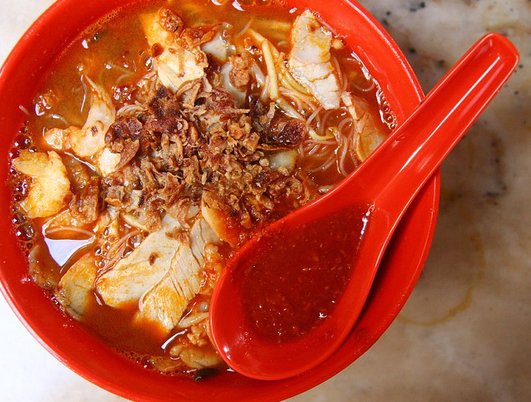
福建面 hokkien mee
据說為早期移民遷來檳島的福建人所研發,當時在日據時期,住在姓氏橋一帶福建人魚產都只能售賣給日本軍人,在這樣困境下,他們把蝦殼蝦頭煮成今天中國福建都沒有的福建麵,这是福建先賢在檳城刻苦耐勞的證據之一。 也有说是从福建一带流传的食物,泉州一带称为夏面,过后随着华裔先辈下南洋而流传.
Hae mee (also called prawn mee) is a noodle soup dish popular in Singapore and Malaysia. It can also refer to a fried noodle dish known as Hokkien mee. The dish’s name literally means “prawn noodles” in the Hokkien dialect of the Chinese language.
Egg noodles are served in richly flavoured dark soup stock with prawns, pork slices, fish cake slices, and bean sprouts topped with fried shallots and spring onion. The stock is made using dried shrimps, plucked heads of prawns, white pepper, garlic and other spices. Traditionally, lard is added to the soup, but this is now less common due to health concerns. A “dry” (without soup) version is also available and this version usually involves flavouring the noodles and toppings with vinegar, soy sauce, oil and chili if desired. The dish is also usually served with freshly cut red chili slices in light [soy sauce] and lime
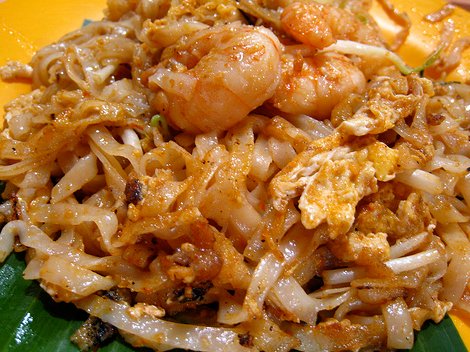 炒粿條 Fried Kway Teow
炒粿條是潮州人的小吃,在19世紀,在星马發揚光大,成為馬來西亞和新加坡的美食,也是檳城的代表美食之一。馬來語是根据福建话(或潮州话,大致相同)“炒果条”的音译,称为“Char Kway Teow”。在馬來西亞除了華人售賣炒粿條外, 馬來人也有售賣炒粿條。
在檳城和吉隆坡的炒粿條略有不同,檳城炒粿條所使用的粿條是比較幼細和長的;而吉隆坡人所使用的粿條則是比較類似沙河粉,是比較寬大的。雖然兩地所使用的粿條不同,但是味道和佐料都是大同小異的,都是以醬油、黑醬油、蠔油為主要醬料,嗜辣者還可以配上森巴辣椒醬,使炒粿條的味道在咸甜中帶點辣味。炒粿條的佐料主要跳不出蝦仁、雞蛋、臘腸、綠豆芽、魚餅和韭菜這幾種。新加坡版的则还用了些许的甜酱油,同时蚬也是不能少的佐料。
Char kway teow, literally “stir-fried ricecake strips”, is a popular noodle dish in Brunei, Indonesia, Malaysia, and Singapore. The dish is considered a national favorite in Singapore.
It is made from flat rice noodles (河粉 hé fěn in Chinese) of approximately 1 cm or (in the north of Malaysia) about 0.5 cm in width, stir-fried over very high heat with light and dark soy sauce, chilli, a small quantity of belachan, whole prawns, deshelled cockles, bean sprouts and chopped Chinese chives. The dish is commonly stir-fried with egg, slices of Chinese sausage and fishcake, and less commonly with other ingredients. Char kway teow is traditionally stir-fried in pork fat, with crisp croutons of pork lard, and commonly served on a piece of banana leaf on a plate.
Char kway teow has a reputation of being unhealthy due to its high saturated fat content. However, when the dish was first invented, it was mainly served to labourers. The high fat content and low cost of the dish made it attractive to these people as it was a cheap source of energy and nutrients. When the dish was first served, it was often sold by fishermen, farmers and cockle-gatherers who doubled as char kway teow hawkers in the evening to supplement their income.
